
How to Optimize Thermostat Settings for Savings & Longevity
Managing your home environment is about more than just finding a comfortable temperature on a whim. Many homeowners unknowingly fluctuate their settings in ways that spike utility bills and strain sensitive mechanical components. By understanding the relationship between setpoints and system physics, you can create a climate that balances personal comfort with fiscal responsibility.
Achieving this balance requires a strategic approach to your daily schedule and seasonal transitions. If you want to ensure your system is prepared for the upcoming season, schedule professional air conditioning maintenance with Thompson’s Comfort Connection. We proudly serve homeowners across Salt Lake City, Draper, Midvale, Sandy, Riverton, and Cottonwood Heights to keep your equipment running at peak efficiency. Here are some basic tips!
Ideal Temperature Ranges for Homes
Finding the “sweet spot” for your thermostat energy-saving settings can drastically reduce your monthly overhead. The Department of Energy suggests that specific adjustments based on the time of day and your occupancy status can save up to 10% a year on heating and cooling. Following these guidelines helps maintain a steady internal climate without forcing your equipment into high-energy recovery modes.
- Summer Daytime: 78°F is the recommended setting when you are at home and active.
- Summer Nighttime: 82°F or higher is ideal while sleeping, provided you use fans to maintain airflow.
- Winter Daytime: 68°F allows for significant savings while keeping the living space warm enough for comfort.
- Winter Nighttime: 62°F to 65°F is suggested to reduce heating cycles while you are tucked under blankets.
- Away Periods: 85°F in summer or 58°F in winter prevents the home from reaching extreme temperatures while you are at work.
How Temperature Moderation Reduces Wear on HVAC Systems
Every time your system kicks on, it experiences a “startup load” that puts stress on the motor and compressor. By utilizing thermostat energy-saving settings, you reduce the frequency of these cycles. Constant cycling is a primary cause of premature component failure and emergency repairs.
Moderate settings ensure that when the system does run, it operates for a sufficient duration to dehumidify the air properly. Short-cycling, often caused by extreme temperature swings, prevents the system from reaching its optimal operating state. This efficiency is further protected when you prioritize regular air conditioning maintenance to clear debris and lubricate moving parts.
Tips on Using Programmable or Smart Thermostats
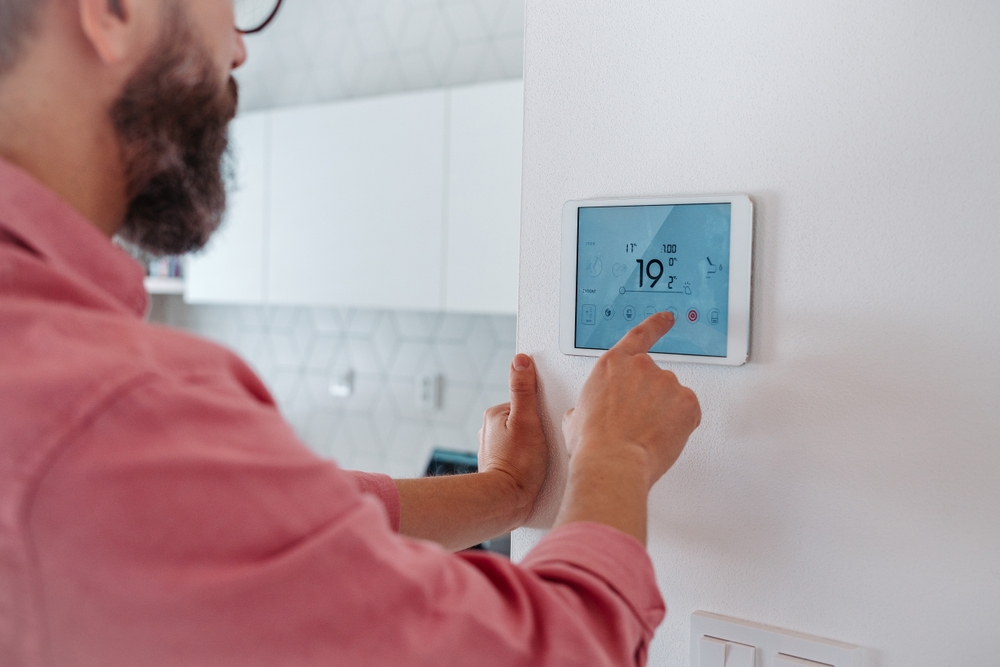
Modern technology allows you to automate your thermostat’s energy-saving settings so you never have to remember to adjust the dial. Smart thermostats learn your habits and can even sense when you have left the house. This automation removes the human error factor that often leads to wasted energy.
To get the most out of these devices, avoid the temptation to manually override the schedule frequently. Constant manual adjustments can confuse the learning algorithms and lead to inefficient heating or cooling patterns. It is best to set a baseline schedule and let the technology manage the incremental changes throughout the day.
Common Thermostat-Setting Mistakes to Avoid
Even with the best intentions, certain habits can undermine your efforts to save money and protect your HVAC unit. Many people treat their thermostat like a gas pedal, thinking a lower setting will cool the house faster. In reality, HVAC systems move air at a constant rate regardless of how low or high you set the temperature.
- Cranking the Temperature: This does not result in faster cooling or heating but simply causes the system to overshoot the target.
- Neglecting the Battery: Many thermostats require battery power to maintain settings, and a dead battery can cause the system to fail or revert to defaults.
- Poor Placement: Installing a thermostat near a drafty window or a heat-producing lamp leads to “ghost readings” and inaccurate cycling.
- Skipping Maintenance: Failing to book annual air conditioning maintenance means your thermostat is working with a system that is physically struggling to perform.
- Drastic Setbacks: Turning the system completely off when you leave can cause the interior to become so hot or cold that the recovery period uses more energy than you saved.
Optimizing your home for efficiency is a year-round commitment that pays off in lower bills and a longer equipment lifespan. Consistency is the key to mastering your thermostat energy-saving settings and keeping your home environment stable. When your hardware is well-cared for, it provides a more reliable performance during the most extreme Utah weather.
To keep your cooling system in top shape, contact Thompson’s Comfort Connection for comprehensive air conditioning maintenance. Our expert technicians are ready to assist residents in Salt Lake City, Draper, Midvale, Sandy, Riverton, and Cottonwood Heights. We are dedicated to ensuring your home remains a sanctuary of comfort through every season.
Related Articles

A Homeowner’s Guide to Boiler Ventilation and Safe Exhaust
Maintaining a high-efficiency boiler system requires more than just checking…
[ READ MORE ]
How to Optimize Thermostat Settings for Savings & Longevity
Managing your home environment is about more than just finding…
[ READ MORE ]
How Proper Insulation Enhances Heating System Performance
Maintaining a cozy home during a Utah winter requires more…
[ READ MORE ]